
Choosing the power source is a fundamental decision when installing electric vehicle supply equipment (EVSE) in a multi-unit residential building.
There are two main options: individual power source and shared power source, each with its own billing and infrastructure implications.
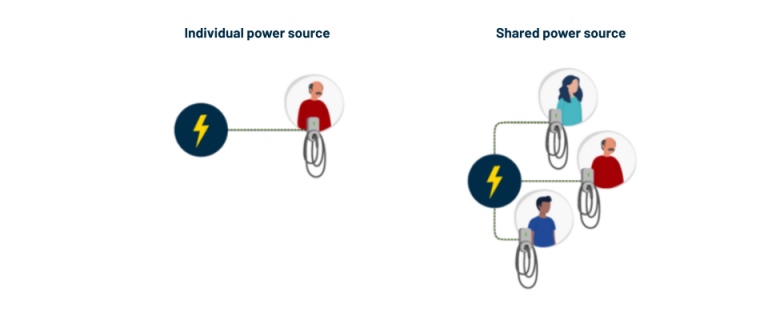
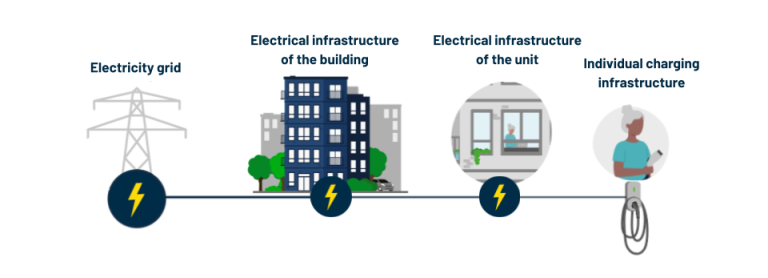
Individual power source: electricity supplied from the dwelling
With an individual power supply, the charging device is connected directly to the electrical infrastructure of the unit. This allows the electricity consumption of the charging station to be billed to the resident’s personal utility bill. It is a simple and transparent billing solution, as it does not require a complex billing system.
Shared power source: new electrical infrastructure dedicated to charging
When a shared power source is chosen, new electrical infrastructure is installed specifically for charging electric vehicles. This involves adding a new electricity meter and potentially a transformer and a new electrical panel. These new components can be connected either to the building’s existing electrical infrastructure or directly to the electricity grid.
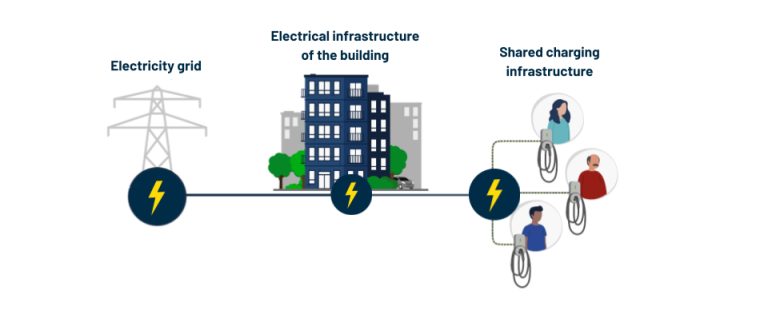
The advantage of this approach is that the building owner receives a separate electricity bill for charging, which they can then pass on to users. It is important to note that the electricity rate for this type of shared meter may differ from the residential rate; a specific rate for EVs may be available, but in other cases, a higher rate with penalties for peak events may apply. This solution is particularly suitable for powering multiple charging devices and often requires the integration of an electric vehicle energy management system (EVEMS) to optimize the use of available electrical capacity.
Once the power source (individual or shared) has been selected, the next step is to determine precisely where the charging stations will be connected.